

Virgin Voyages’ cancellation policy now depends on your fare type. Suites, Essential, and Premium fares get a 7 day grace period, then Future Voyage Credit through 45 days out, then final funds at 44 days. Lock-it-in Rate and Base fares are non-refundable the moment you book, with no exceptions.
I’ve talked to people who locked in a lower Virgin Voyages fare, felt good about the price, and then lost the entire deposit weeks later when a work trip moved. They didn’t do anything wrong. They just didn’t know the fare they picked came with a catch nobody explained to them at checkout.
Virgin changed its cancellation rules, and it isn’t a small update. Refund eligibility now splits by fare type, and two of the five fare options carry zero flexibility from the second you book. If you’re still shopping for a Virgin Voyages cruise, this is the part of the decision that matters more than the itinerary, and almost as much as the price itself.
Your Fare Type Decides Everything, Not Just the Sail Date

Virgin Voyages sells five fare types: Lock-it-in Rate, Base, Essential, Premium, and Suites. You can see all five laid out at the point of booking on Virgin’s voyage planner. According to Virgin’s own terms and conditions, the cancellation policy people usually describe (the 120 day window, the grace period, the credit options) only applies to Essential, Premium, and Suites fares. Lock-it-in Rate and Base fares are non-refundable in full, starting the moment you pay your deposit.
There’s no grace period on those two fares. There’s no Future Voyage Credit option either. If your plans change, the money is gone, and that’s true whether you cancel the same day you booked or a year out.
How the Refund Timeline Works on Eligible Fares
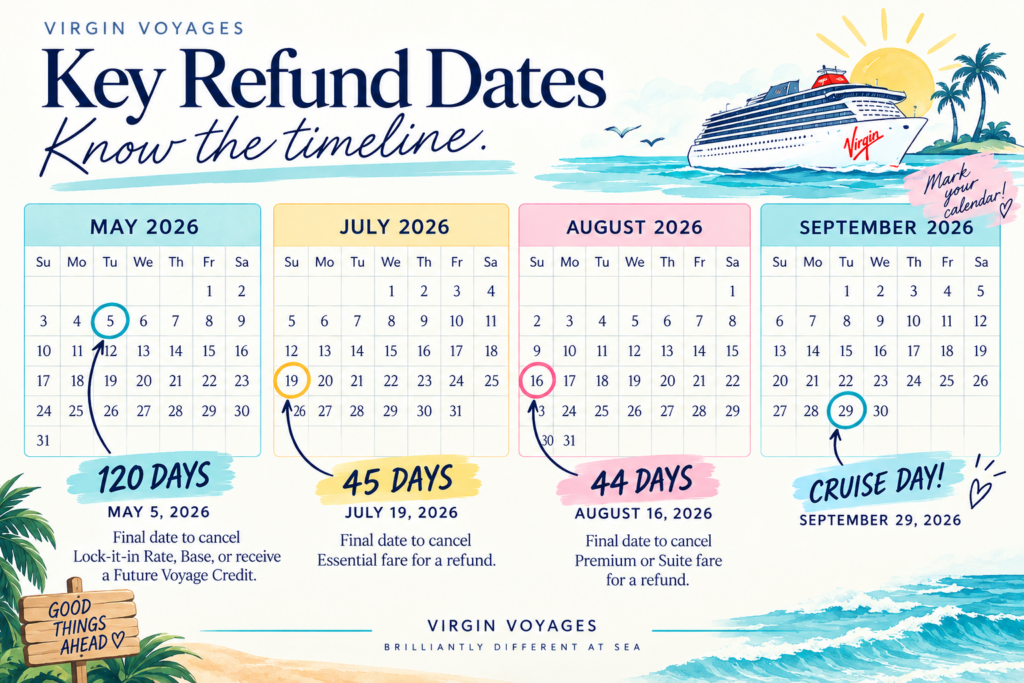
If you booked an Essential, Premium, or Suites fare more than 120 days before sailing, you get a 7 day grace period. Cancel inside that week, and you get a full refund of your deposit and any other payments, back to your original payment method.
After that week passes but before the 120 day mark, the rules shift. You can still get a full refund on everything except the deposit itself, and the deposit converts to Future Voyage Credit instead of cash.
Between 119 and 45 days before departure, everything you’ve paid, deposit included, converts to Future Voyage Credit. No cash comes back at this stage, on any eligible fare. Inside 44 days, all funds are final. Taxes and fees are the one thing Virgin refunds no matter when you cancel or which fare you booked.
Your fare type decides your flexibility long before your sail date ever does.
What Happens to Your Deposit If You Cancel
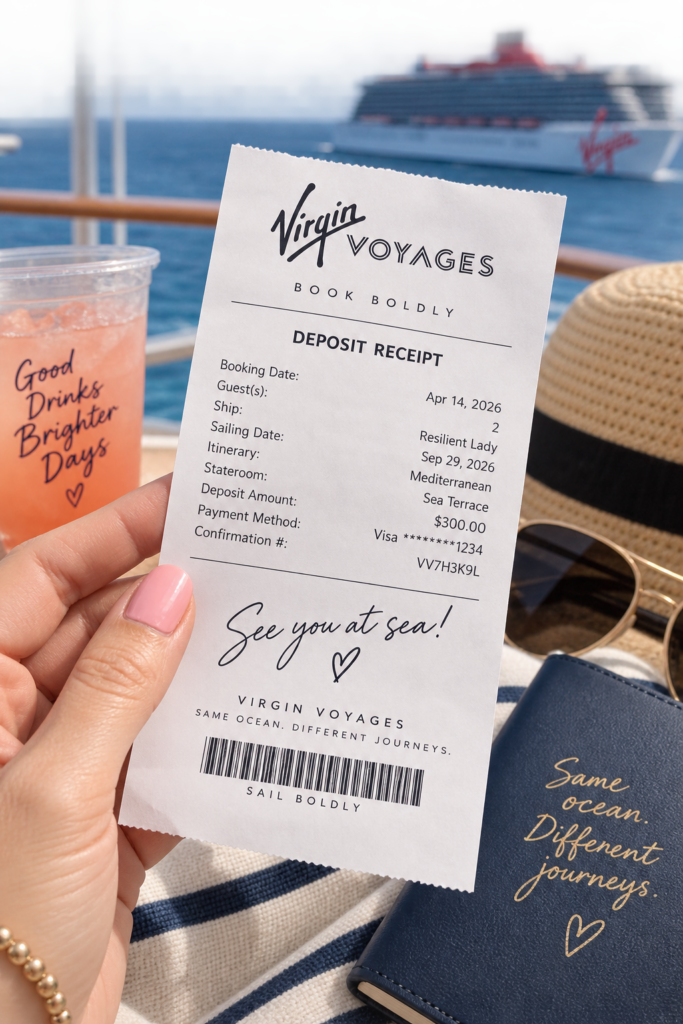
[ADD: Image of a hand holding a printed cruise deposit receipt. Alt tag: “virgin voyages deposit refund future voyage credit”]
Future Voyage Credit sounds simple until you try to use it. It’s good for one year from your original sail date, it can’t be transferred to someone else, and it can’t be converted into onboard spending money. If your cruise was supposed to sail in June 2027, your credit expires in June 2028, whether you remember that date or not.
The credit also only applies to Virgin Voyages sailings. It won’t cover a flight, a hotel, or a transfer you booked separately, even if you booked those through Virgin as add-ons.
Where a Travel Advisor Actually Changes the Outcome
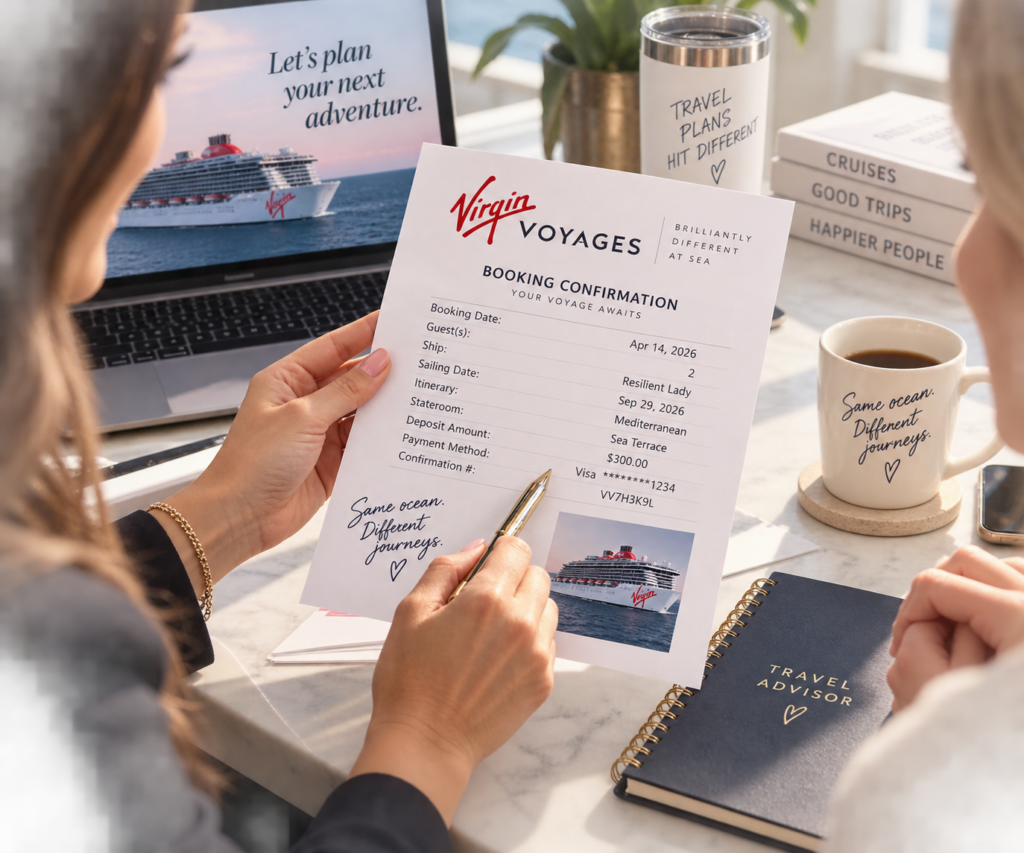
This is the part most people skip past, and it’s the part that would have saved the story I opened with. According to ASTA’s most recent industry data, 66 percent of cruise bookings already go through a travel advisor, and half of travelers say they’re more likely to use one now than they were in the past. There’s a reason for that, and it isn’t just convenience.
When we book a Virgin Voyages cruise for a client, the first thing we check is the fare type, before we ever look at the cabin or the itinerary. We’ve caught clients about to book a Base fare without realizing it was non-refundable, and moved them to a fare that actually matched how firm their travel dates were. We also watch for promotions Virgin runs from time to time, onboard credit offers, and group pricing that can bring the cost below what’s showing on the public booking page, none of which are guaranteed on every sailing, but worth checking before you assume the listed price is the only price.
As a CLIA certified cruise specialist, I stay with clients through every one of these deadlines, the 120 day mark, the 45 day window, the final payment date, so none of it sneaks up on someone mid-trip planning.
Virgin Voyages Fare Types: When Each One Makes Sense
Choose Essential, Premium, or Suites when:
- Your travel dates could still shift for work, family, or health reasons
- You’re booking more than 120 days out and want the 7 day grace period as a safety net
- You’d rather have Future Voyage Credit than lose everything if plans change
A client planning a milestone trip a year out almost always fits here. A schedule that far in advance has more room to move than anyone expects.
Think twice about Lock-it-in Rate or Base when:
- Your dates are anything less than certain
- You haven’t purchased Voyage Protection to cover the gap
- The fare savings are small enough that losing the full amount would actually hurt
The lower price on these fares isn’t a discount. It’s Virgin pricing in the risk you’re agreeing to carry yourself.
Before You Book a Virgin Voyages Cruise, Do This
A few habits catch most of the problems before they happen.
Check your fare type before you pay. It’s listed at checkout, but it’s easy to skim past when you’re focused on the price. Confirm whether you’re looking at Lock-it-in, Base, Essential, Premium, or Suites before you enter a card number.
Buy Voyage Protection if your plans could move. It’s underwritten by Aon and can cover illness, delays, or emergencies the standard cancellation policy won’t touch. [INTERNAL: link to a travel insurance explainer once that page exists]
Mark your Future Voyage Credit expiration date the day you get it. The one-year window doesn’t extend on its own, and it’s easy to lose track of a date that far out.
Work with someone who checks the fine print before you book, not after. This is the one step that catches the other three.
Ready to Book the Right Virgin Voyages Fare the First Time?
We’ve walked clients through this exact fare decision more than once, and it’s a five-minute conversation that can save a full deposit if plans change later. If you’re shopping for a Virgin Voyages sailing and want someone to confirm you’re booking the right fare type for how firm your dates actually are, that’s exactly what the Discovery Call is for.
Book your free Discovery Call →
Already have a sailing in mind? You can browse current Virgin Voyages sailings here, and any cabin you hold through that link stays attached to us if you’d like help with the fare decision before you pay.
What is the Virgin Voyages cancellation policy?
It depends on fare type. Essential, Premium, and Suites fares get a 7 day grace period for a full refund outside 120 days, then Future Voyage Credit through 45 days out, then final funds inside 44 days. Lock-it-in Rate and Base fares are non-refundable from the moment of booking.
Is my Virgin Voyages deposit refundable?
Only within the 7 day grace period, and only on Essential, Premium, or Suites fares booked more than 120 days before sailing. On Lock-it-in Rate and Base fares, the deposit is never refundable in cash.
How much is the Virgin Voyages deposit?
The standard deposit is 20 percent of the total voyage fare, not a flat dollar figure. The exact amount depends on the sailing and cabin category.
How long do I have to use Future Voyage Credit?
One year from your original sail date. It can’t be transferred to another person, extended automatically, or converted into onboard spending money.
Can I change the name on my Virgin Voyages reservation instead of canceling?
Yes, on eligible fares, up to 48 hours before departure, with no extra fee. This lets you hand your cabin to someone else rather than lose the trip entirely.
Does booking through a travel advisor change the cancellation policy?
The cancellation policy itself stays the same regardless of who books it. What changes is whether someone catches a non-refundable fare before you pay, and whether you have someone tracking your deadlines and available promotions along the way.